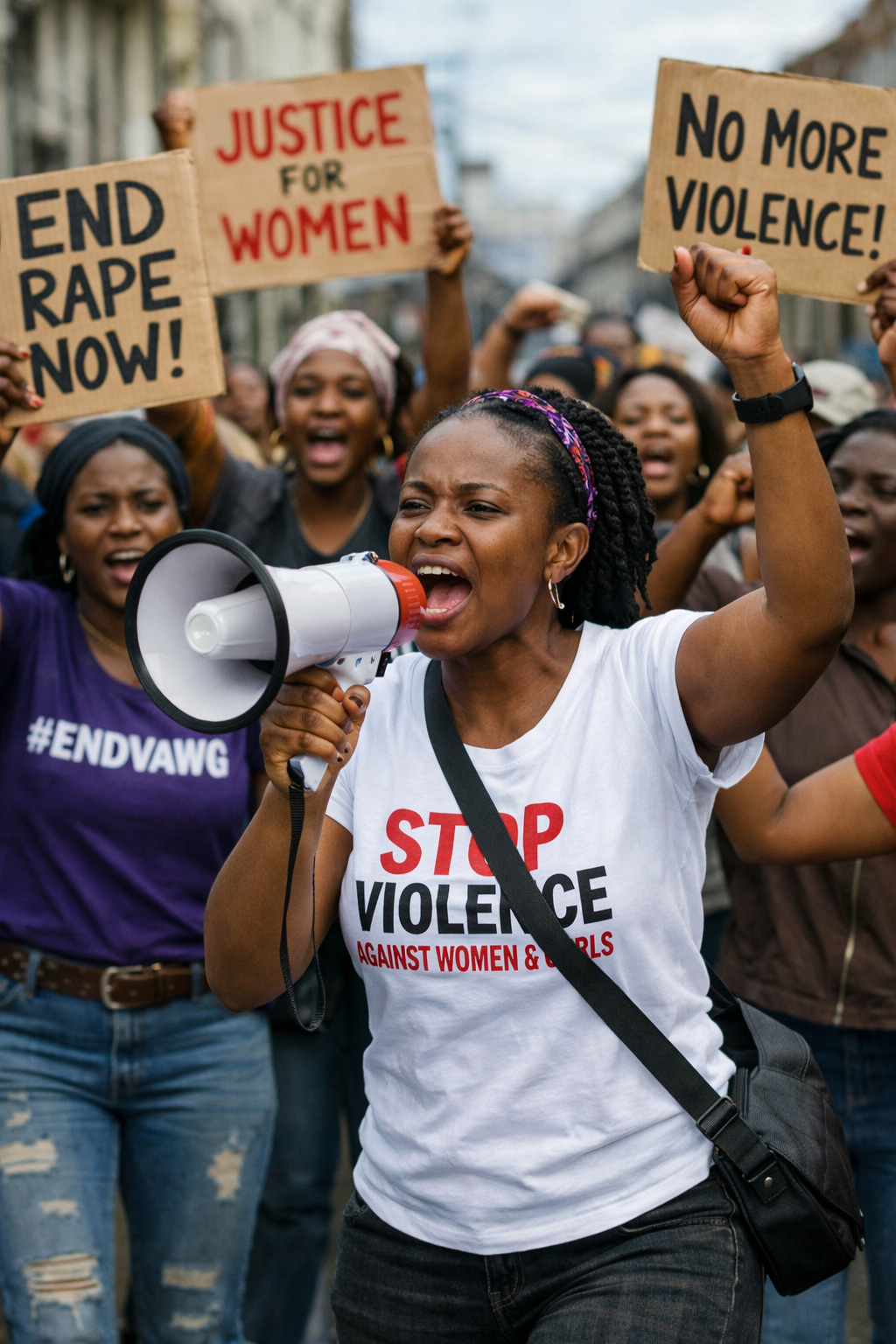
Ending Violence Against Women and Girls (EVAWG) is not optional, it is a legal and human rights imperative across Africa. Today, across the world, violence against women and girls (VAWG) remains one of the most widespread human rights violations. Despite decades of advocacy and policy reform, nearly one in three women globally has experienced physical and/or sexual violence in her lifetime, a figure that has barely changed in two decades. In Nigeria, surveys reveal that many women and girls face physical, sexual, and psychological abuse, much of it unreported due to stigma, fear, and harmful social norms.
This violence occurs in homes, schools, workplaces, public spaces, and increasingly online. It affects women and girls of all ages, backgrounds, and communities, threatening not only individual wellbeing but societal progress, undermining justice, and perpetuating inequality.
Violence affects not only individual wellbeing but also societal progress, undermining justice and perpetuating inequality.
VAWG destroys lives, families, and communities. It affects every sector of society. Survivors face trauma, health risks, and barriers to education and employment. Communities bear the economic and social costs, and nations are held back from achieving progress. EVAWG is not just a moral imperative, it is essential for building inclusive, prosperous, and peaceful societies.
EVAWG requires everyone, governments, communities, institutions, men and boys, and civil society to take action. It means challenging harmful social norms, holding perpetrators accountable, and creating safe spaces where women and girls can thrive. Advocacy, awareness, and policy reforms must go hand-in-hand with education and empowerment initiatives.
EVAWG requires societal transformation and collective action. Communities must raise awareness about the impact of violence, challenge harmful norms, and promote respect, equality, and safe spaces for everyone. Survivors must be supported through accessible services, safe spaces, and legal protection. Men and boys should be engaged as allies to promote positive masculinities, challenge harmful behaviours, and encourage active participation.
Institutions, workplaces, digital platforms and public spaces must adopt zero-tolerance policies, enforce and strengthen laws that protect women and girls, and collect data to inform policy and monitor progress.
A Call to Action
EVAWG is not the work of one person, one organization, or one government, it is a collective responsibility. Alliances for Africa calls on all of us, governments, civil societies, communities, families, and individuals to stand together in contributing towards EVAWG. We can all contribute by speaking out, supporting survivors, mentoring young people, and holding leaders accountable. Every action, every policy, and every conversation matters.
Together, we can create societies where women and girls live free from fear, free from violence, and free to thrive.
The journey to ending VAWG is long, but every step matters. Every voice raised, every policy strengthened, and every community educated brings us closer to a world of justice, dignity, and equality for everyone.
Let us commit today and every day to ending violence, empowering women, and transforming society.
The time is now!
#EndVAWG
#EqualityForAll