For Immediate Release
Date: 4th February, 2026.
Alliances for Africa Commemorates World Cancer Day 2026
Cancer is a group of more than one hundred diseases that occur when abnormal cells grow uncontrollably and spread to other parts of the human body. While cancer can affect anyone, women and girls bear a disproportionate burden of the disease due to biological factors, gender inequality, poverty, and limited access to healthcare. Beyond the individual, cancer affects families, communities, and entire societies, with women often carrying the greatest emotional, economic, and caregiving responsibilities.
In 2022, approximately 20 million cancer cases were newly diagnosed and 9.7 million people died from the disease worldwide. By 2050, the number of cancer cases is predicted to increase to 35 million based solely on projected population growth (Global Cancer Facts & Figures, 5th edition). Women and girls in low and middle-income countries face the highest risks of late diagnosis and preventable deaths. Yet, while cancer remains a major public health challenge, it is not insurmountable.
Cancer can develop in almost any part of the body, but many of the most common and deadly cancers are those that primarily affect women. Breast cancer is the most frequently diagnosed cancer among women worldwide, while cervical cancer remains one of the leading causes of cancer-related deaths among women in Africa. These cancers are largely preventable and treatable when detected early, yet thousands of women and girls continue to die due to inadequate screening services, lack of access to treatment, stigma, and weak health systems. These realities expose deep gender inequalities and highlight how women’s health is often undervalued and underfunded.
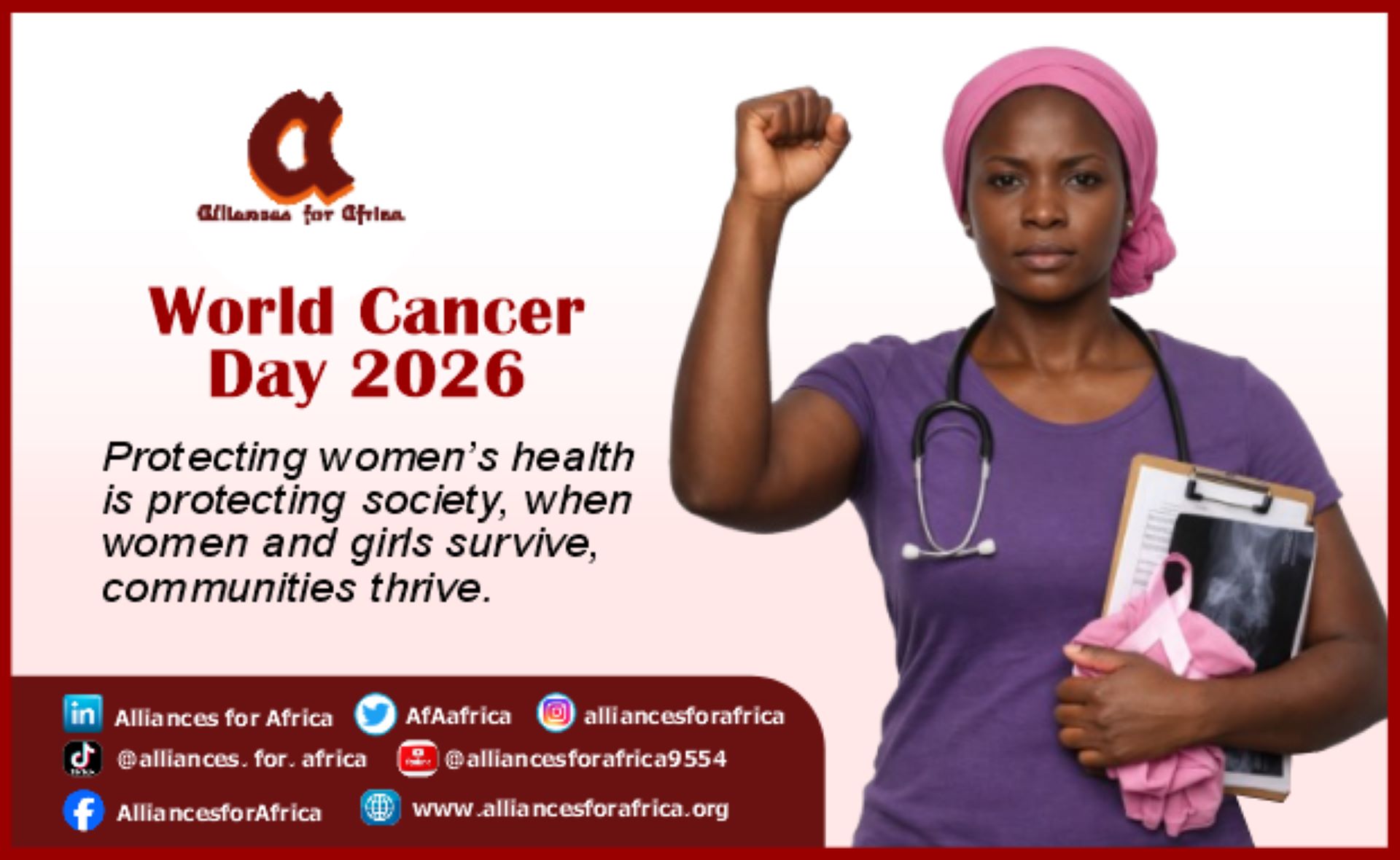
“Protecting women’s health is protecting society, when women and girls survive, communities thrive.”
World Cancer Day serves as a powerful reminder that cancer affects women and girls in deeply unequal ways and that urgent, collective action is required. Alliances for Africa’s theme “Every Story Matters: Uniting to Fight Cancer” centres on the lived realities of women and girls whose experiences are too often ignored in health policies and decision-making spaces. While every woman’s cancer journey is unique, they are united by a shared struggle for dignity, access to care, and the right to quality health.
At Alliances for Africa (AfA), we believe that every woman’s story matters. Behind every diagnosis is a woman or girl navigating not only illness but also gender-based barriers such as poverty, caregiving expectations, limited mobility, and unequal power relations. Some women suffer in silence due to stigma or fear, some show extraordinary courage that inspires communities, and others rely on informal support systems because formal healthcare is inaccessible. Yet across these experiences runs a common thread: the demand for justice, survival, and a future where cancer does not rob women and girls of their rights to life and to achieve their dreams.
Cancer among women is driven by multiple factors, including harmful social norms, lack of access to sexual and reproductive health services, exposure to environmental risks, poverty, and limited health education. Infections such as human papillomavirus (HPV), which causes cervical cancer, continue to affect millions of women and girls due to gaps in vaccination and screening programmes. While not all cancers are preventable, many affecting women can be significantly reduced through prevention, early detection, and timely intervention.
The impact of cancer on women and girls is profound. Beyond physical suffering, women often face emotional distress, financial hardship, job loss, and increased unpaid care responsibilities. Girls may drop out of school to care for sick relatives or due to them suffering from the illness themselves, perpetuating cycles of inequality. In many African communities, weak healthcare systems and high out-of-pocket costs place an unfair burden on women, deepening gender and social inequalities.
Uniting in the fight against cancer, therefore means demanding action that protects women and girls. Governments have a responsibility to invest in gender-responsive healthcare systems, expand access to breast and cervical cancer screening, ensure HPV vaccination for girls, provide affordable and quality cancer treatment, and remove financial barriers to care. Policies must prioritise women’s health, strengthen primary healthcare, and ensure that women and girls, especially those in rural and marginalized communities are not left behind.
AfA believe that collaboration is essential to advancing women’s health and rights. When governments, healthcare providers, NGOs, civil societies, and communities work together, cancer prevention and care for women and girls can be transformed. By amplifying women’s voices, sharing lived experiences, and demanding accountability, we can challenge systemic neglect and build a future where women’s lives are valued and protected through gender responsive health policies.
On this World Cancer Day, we call on governments, institutions, and communities to listen to women, invest in women’s health, and act to protect women and girls from preventable cancer deaths. Celebrate survivors, honour the women we have lost, and stand in solidarity with those still on their journey. Because when women and girls are protected, the society is being protected.
Every story matters and together, we can change the course of cancer in Africa and beyond.
#EveryStoryMatters
#WorldCancerDay
#UnitedAgainstCancer
#AlliancesForAfrica
Alliances for Africa (AfA)
www.alliancesforafrica.org
Facebook: AlliancesforAfrica
Twitter: @afaafrica
Instagram: @alliancesforafrica
LinkedIn: Alliances for Africa